
2020. The world had stopped.
Locked down, grounded, and suddenly confronted with more time than I knew what to do with, I did what any self-respecting hoarder of computing history would do: I dragged out the boxes.
Dozens of them. Stacked in corners, shoved under shelves, quietly accumulating decades of paper memory. Inside were the physical remains of a programming life stretching back to the early 1980s — computer printouts, handwritten notes, design sketches, and page after page of code listings from machines that most people today have never touched.
I started scanning. And then, buried deep in one of those boxes, I found something I hadn’t seen in nearly forty years.
The Games We Built Before We Knew What We Were Doing
Cast your mind back to the early 1980s. My friend Gavin and I were teenagers armed with Commodore VIC-20s and Commodore 64s, an absolute obsession with text adventures, and the reckless confidence of people who didn’t yet know how hard any of this was supposed to be.
We wrote adventures. Real adventures — the kind with maps drawn on graph paper, puzzles that kept you up at night, and a parser that judged your every command. It was painstaking, exhilarating work, and we loved every minute of it.
Our first game, “Shipwrecked,” made it all the way. Completed. Published. Out in the world. For two kids teaching themselves to program, that felt enormous.
Our second game, “Space Station Lyra,” wasn’t so lucky. It reached BETA stage — the skeleton was there, the bones were in place — and then life intervened, as life always does, and the game simply… stopped. No playtesting. No release. No fanfare. Just an unfinished world, frozen in time, waiting on a disk somewhere.
For nearly four decades, that’s exactly where it stayed.
The Discovery
When I pulled those printouts out of the box in 2020, time collapsed.
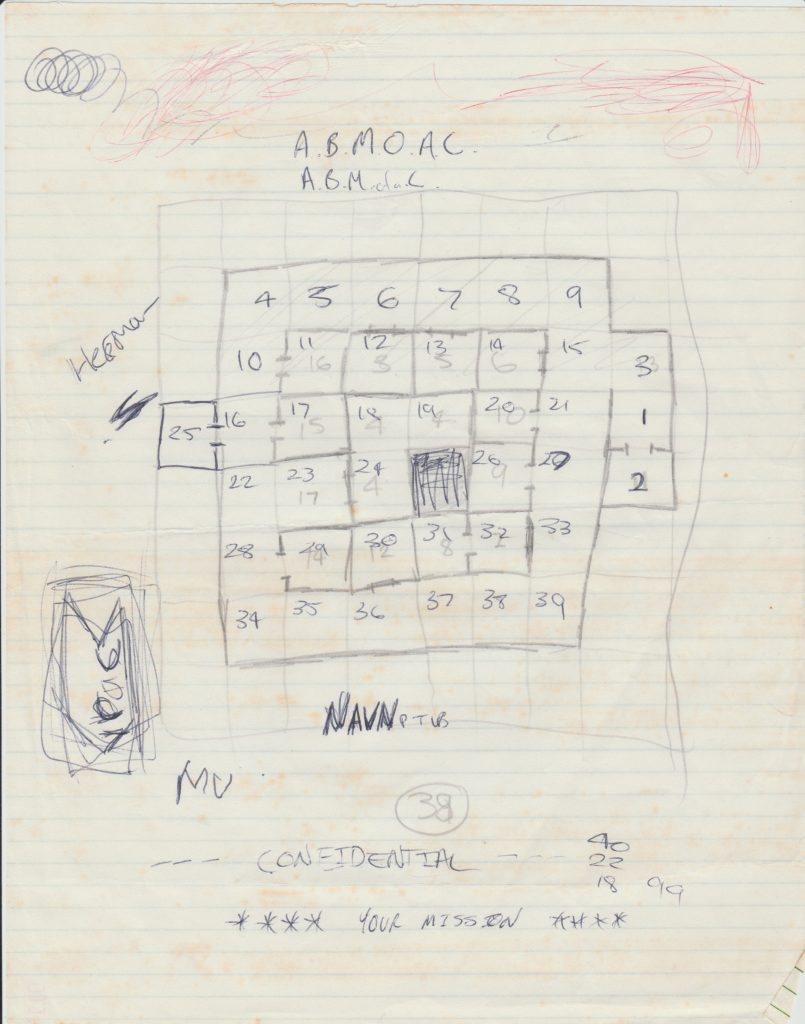
There it was: the source code listings for Space Station Lyra. The hand-drawn game maps. Design notes in teenage handwriting. The entire archaeological record of a game that had never seen the light of day. I scanned everything carefully — every page, every scrawled annotation — and filed it away, not quite ready to face what it would take to bring it back.
Then, in 2024, I went back in.
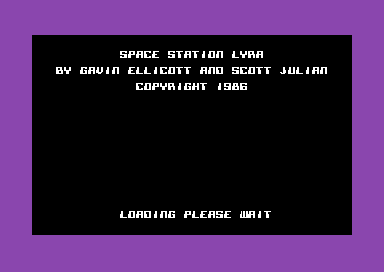
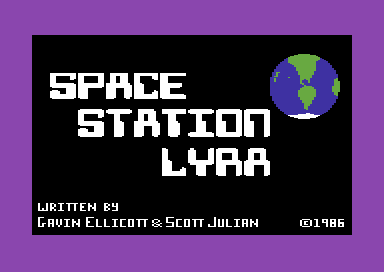
Sorting through the scanned archive, I cross-referenced it against something else I’d almost forgotten I had: disk imagesI’d created roughly fifteen years earlier from my original Commodore floppies. And there, buried in those images, were working save files for Space Station Lyra — including a graphic title screen and a stunning custom space-age font that teenage-me had somehow found the time and ambition to create.
The pieces were all there. Scattered across forty years of storage, but there.
Rebuilding a Ghost
What followed was equal parts archaeology and development — piecing together a game from printouts, disk images, and the faded memory of decisions made in the early 1980s.
The result? Space Station Lyra is now approximately 80% complete.
The disk image is reconstructed. The title screen is restored. The font file is in place. The adventure database — the beating heart of the game’s world — is organised and ready. Everything sits together now in a clean D64 image file, waiting for the final push.
Somewhere in the margins of life — a free weekend, a quiet evening — the remaining 20% is sitting there, entirely within reach. A game that Gavin and I started 39 years ago could finally, actually, be finished.
There’s something almost surreal about that. The teenage boy who drew those maps on graph paper and hammered out those listings on a Commodore keyboard had no idea that one day, a version of himself nearly four decades older would find it all again — and want nothing more than to finally, properly, finish what they started.
Space Station Lyra is waiting.
It’s been patient long enough.